Compression therapy in Chelmsford.
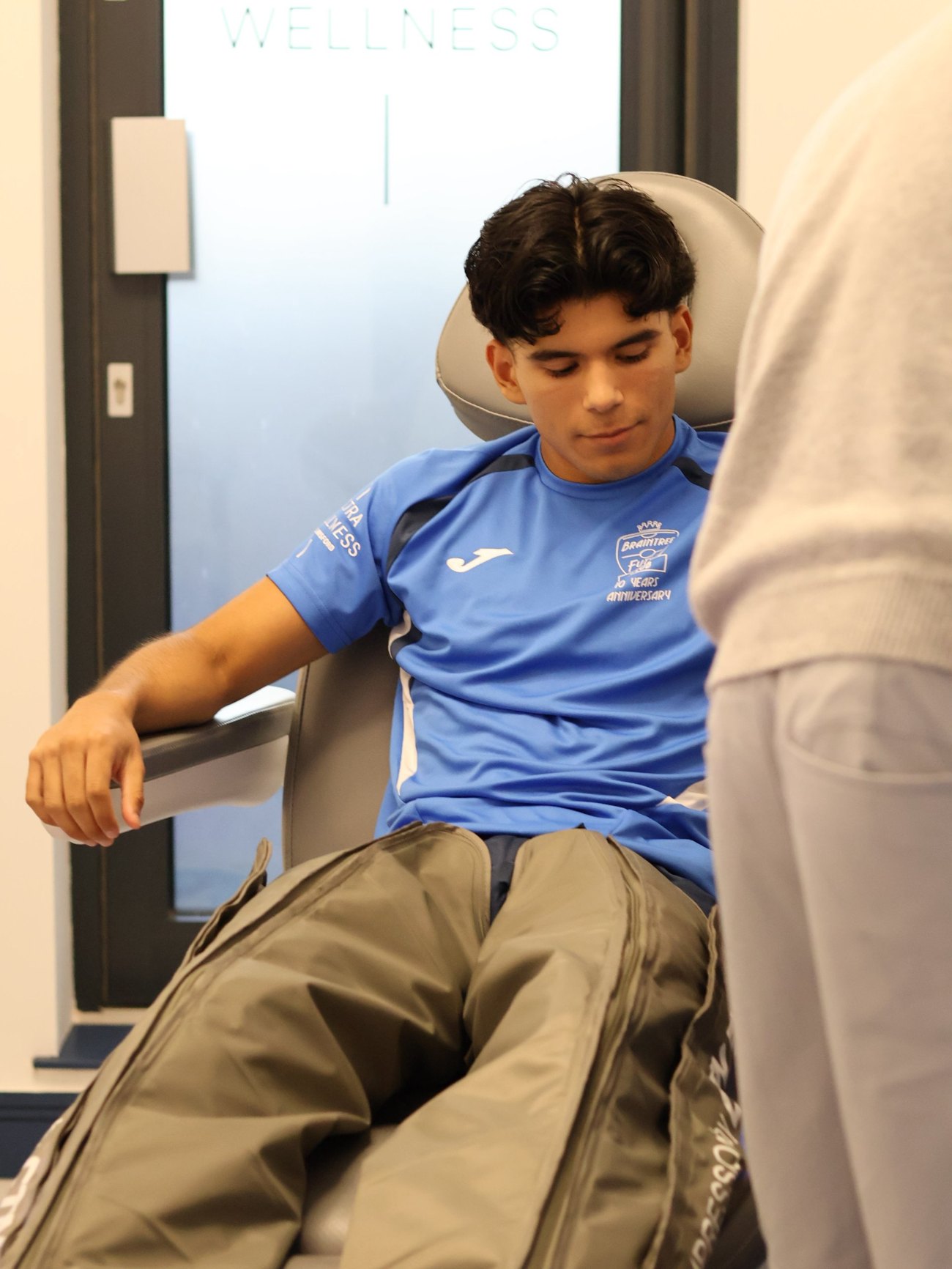
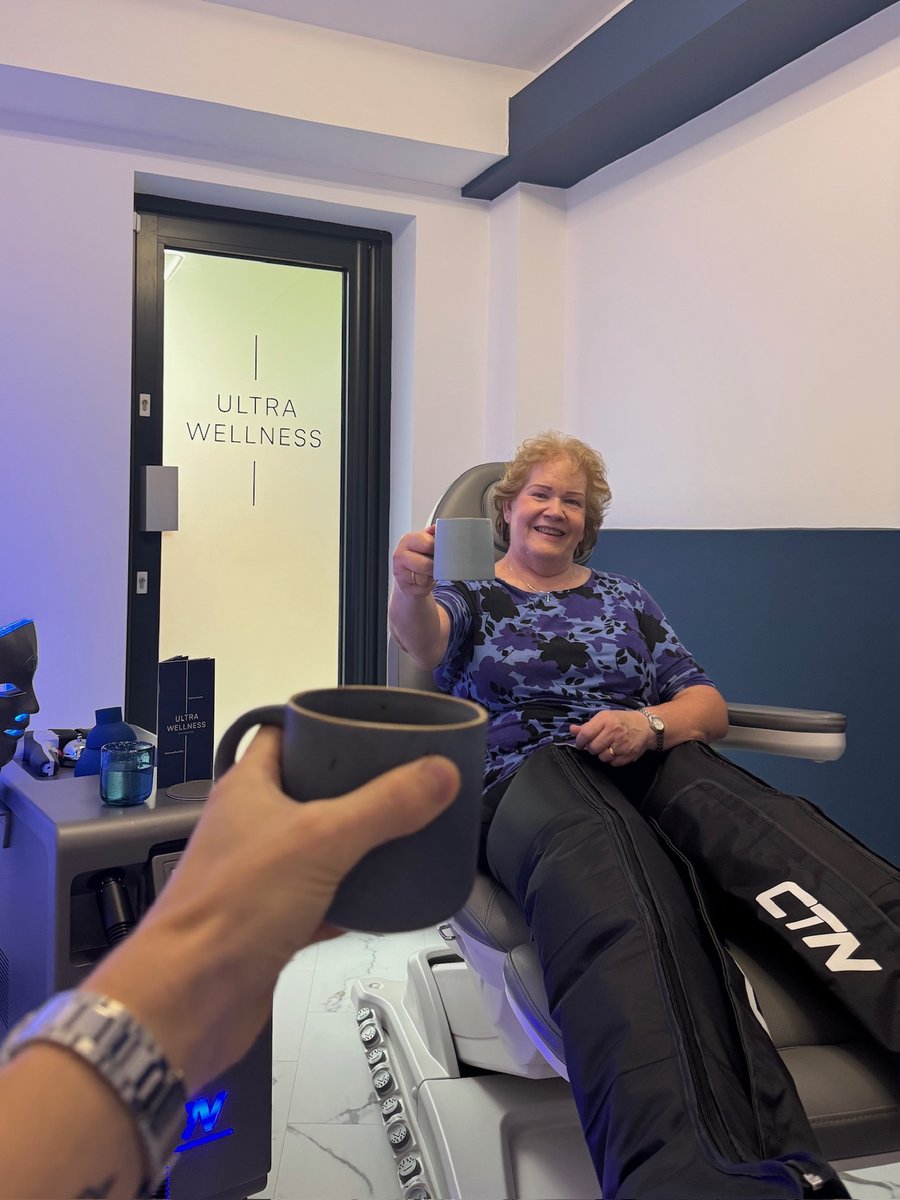
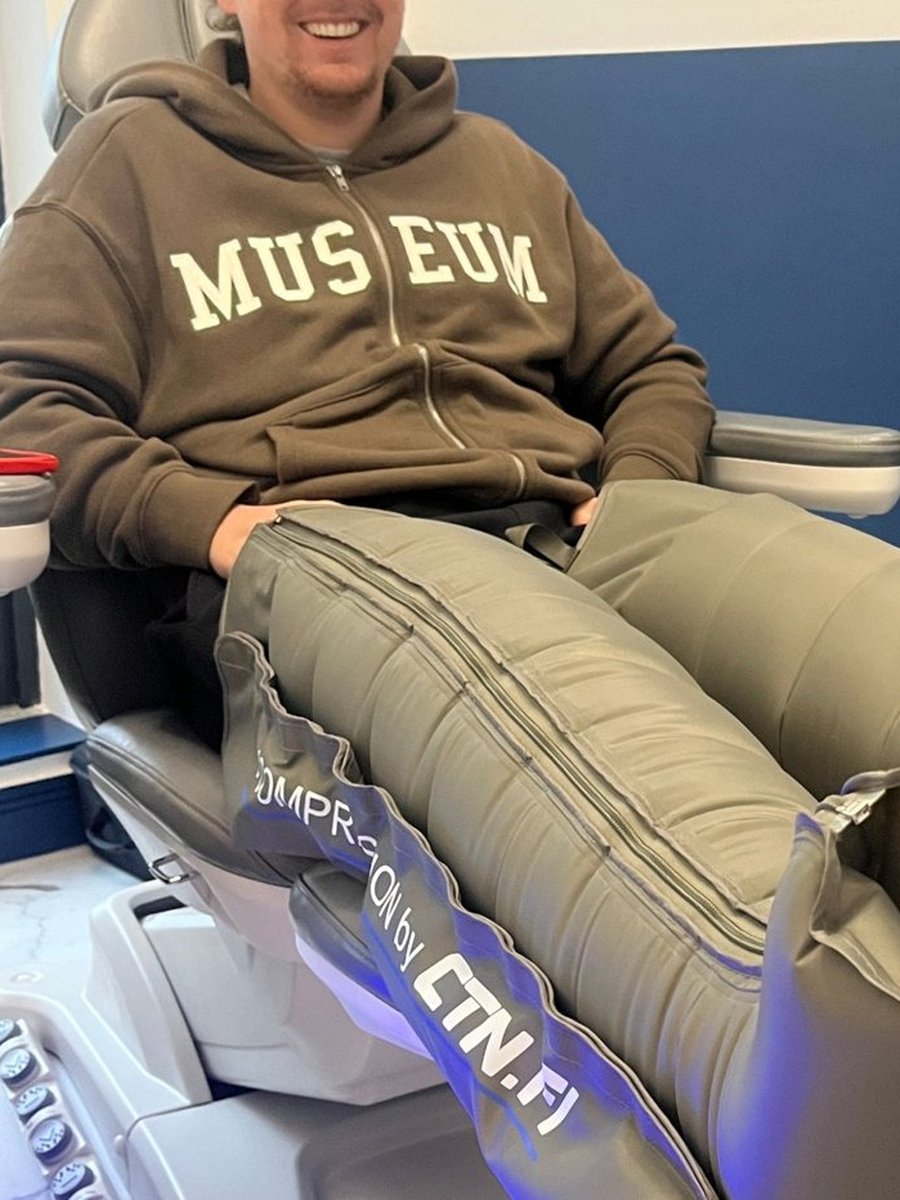
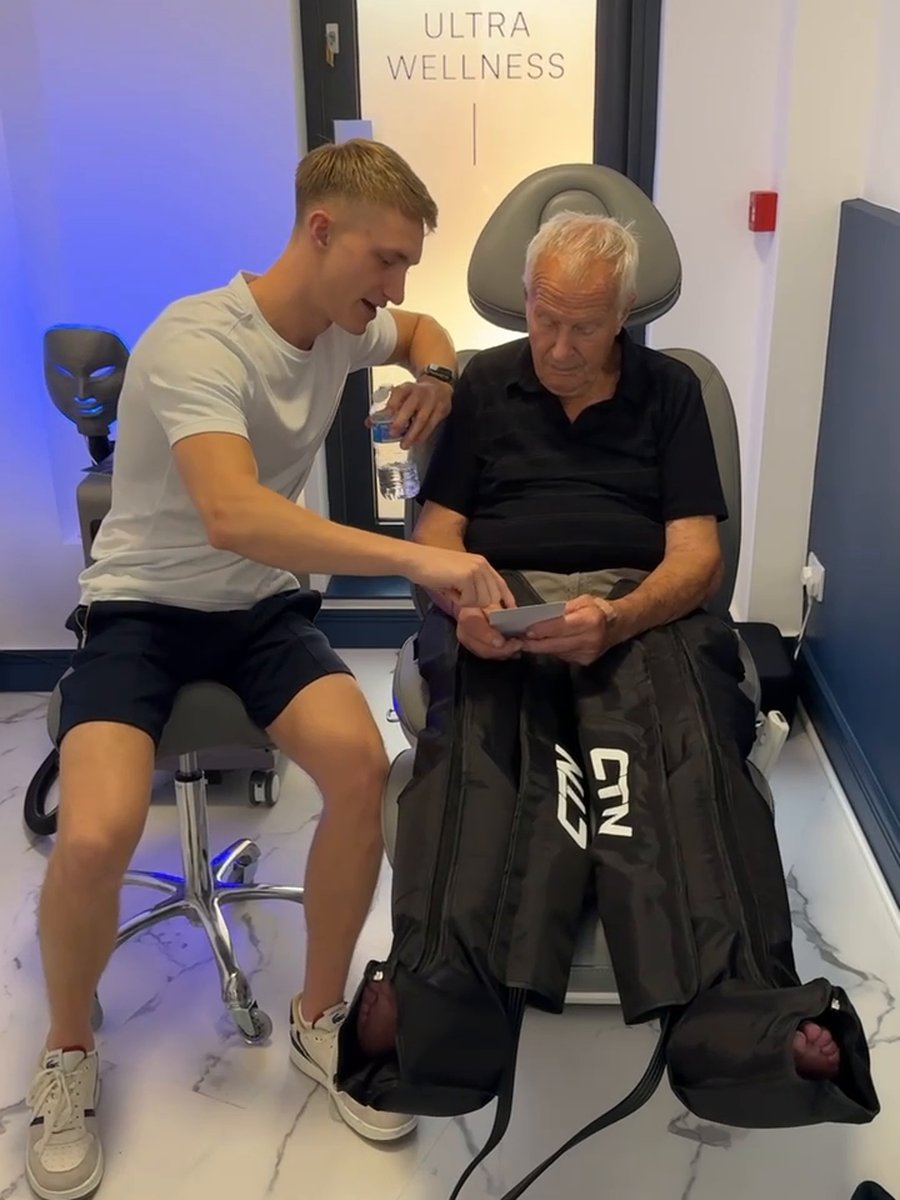
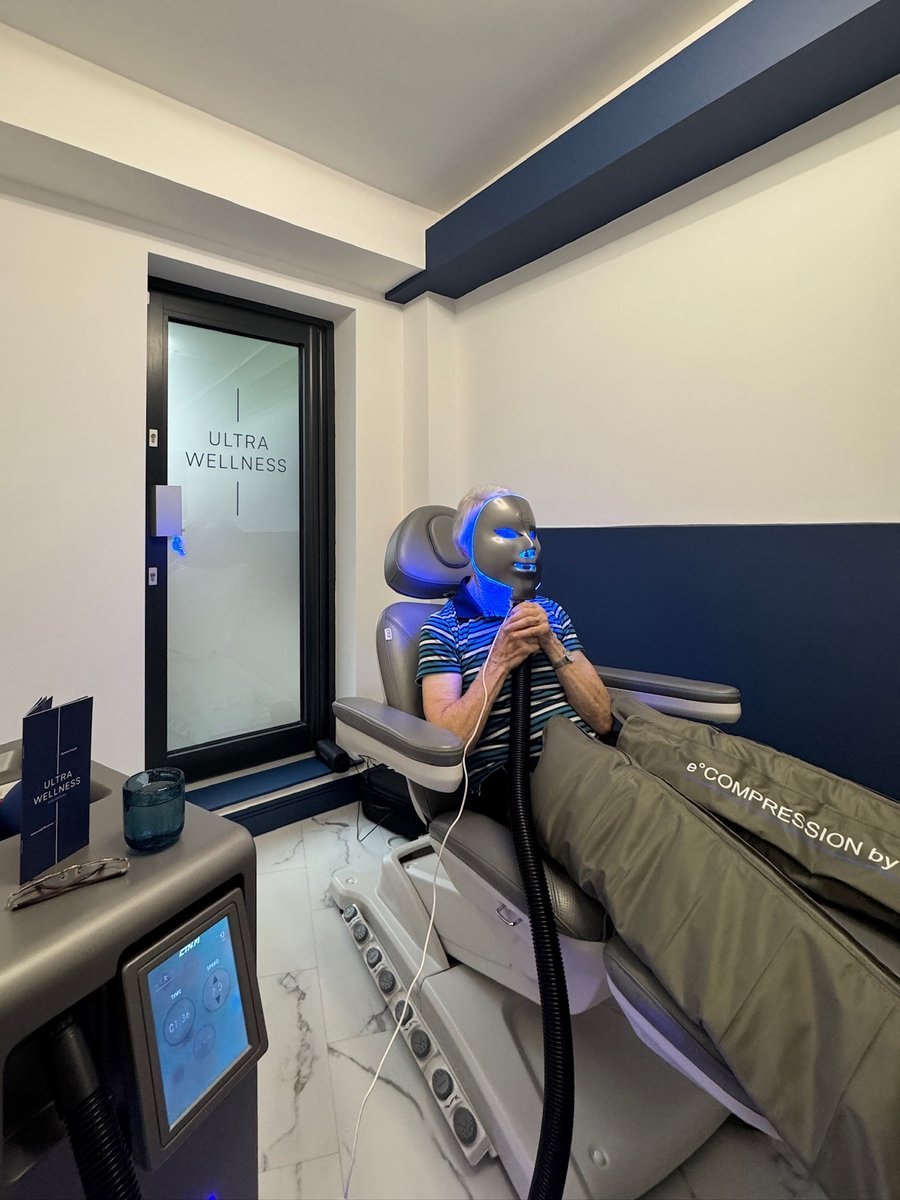
Put your feet up in our compression boots and let air chambers squeeze and release up your legs in a steady rhythm. Choose from five patterns, set the pressure to suit you and settle in for 25 minutes. Many people book it after training or a long day on their feet.
What compression therapy can do for you.
Tired legs
Gentle, rhythmic squeezing that many people find soothing for heavy, tired legs after exercise or long periods of standing or sitting.
Recovery
Finished leg day, a run or a tough training session? Sequential compression is an easy addition to your recovery routine, helping you bounce back from demanding workouts.
Circulation
The rhythmic squeeze and release is designed to encourage blood flow through the legs. Many people use it to help move built-up lactic acid after hard training, and to support the body's natural lymphatic drainage when legs feel heavy or puffy.
What is compression therapy?
Compression therapy uses boots with air chambers that inflate and deflate in sequence, working from your feet upwards. It feels like a firm, rhythmic massage.
You stay seated or reclined, and our team set the pressure so it feels comfortable. You can adjust it at any time.
Designed to help you feel refreshed.
- ✓Boost recovery
- ✓Lymphatic drainage
- ✓Tired, heavy legs
- ✓Reduce swelling
- ✓Improve circulation
- ✓Relieve tightness
Not sure it's right for you?
Compression therapy is not suitable for everyone, for example if you have certain circulation or vein conditions. Speak to your GP first if you have a medical condition, and message us with any questions.
Chat on WhatsAppReal people, real recovery.
What the research says.
Compression therapy is used in sport, recovery and everyday leg care. Here is what published studies have found.
Compression therapy is not a substitute for medical treatment. Please speak to your doctor about any health condition.
Muscle recovery
A meta-analysis of 12 studies (Hill et al., 2014) found that compression garments moderately reduced muscle soreness and helped strength and power recover after hard exercise. A later review of the research (Marqués-Jiménez et al., 2016) also found faster recovery of muscle power and strength.
Leg fatigue and heaviness
A review pooling 15 studies on how recovered people felt after exercise (Marqués-Jiménez et al., 2016) found that wearing compression improved those perceived recovery scores. The same review found less muscle swelling after exercise with compression.
Circulation
In a study of 10 healthy volunteers (Bahadori et al., 2017), a pneumatic compression device worn on the calf increased blood flow in the thigh by about 117% from resting levels. Blood flow was measured using laser imaging.
Swelling and lymphoedema
In a randomised trial of people with lymphoedema (Szuba et al., 2002), adding pneumatic compression to standard decongestive therapy gave an average swelling volume reduction of 45%, compared with 26% for therapy alone. A later meta-analysis of 12 studies (Hou et al., 2024) found that adding pneumatic compression gave extra improvement in lymphoedema within 4 weeks of treatment.
Post-exercise soreness
In a randomised trial (Gu et al., 2025), people who used pneumatic compression after hard plyometric exercise showed significantly better recovery from muscle soreness at 48 and 72 hours than those who did not. The best results appeared 2 to 3 days after exercise.
Travel legs
A Cochrane review of 12 randomised trials and 2,918 air passengers (Clarke et al., 2021) found that wearing compression stockings on long flights reduced leg swelling. It also found far fewer symptomless blood clots in people who wore them, rated as high-certainty evidence.
In their own words.
5.0 from 86 Google reviews. Real client reviews, shown as written.
Single sessions and bundles.
Combine it and save.
Cryotherapy, red light, hyperbaric oxygen, compression, local cryotherapy and Blue Light Cryo Facial.
Book now6 x hyperbaric oxygen (30 min), 6 x red light (20 min) and 6 x compression.
Book nowTailored to your goals, with any combination of therapies.
EnquireSimple from start to finish.
Quick chat
A short health questionnaire and a conversation about how your legs feel.
Boots on
We fit the boots and set a comfortable pressure.
Relax
Around 30 minutes of gentle squeeze and release. Read, rest or catch up on emails.
Carry on
No downtime. Stand up and head back to your day.
Good questions.
What's a session actually like?
You'll be settled comfortably and our team will fit the compression sleeves or boots. They gently inflate and release in a rhythmic pattern while you relax. It's a comfortable, non-invasive session, and you can go straight back to your day afterwards.
Does it hurt?
It shouldn't. Most people describe a firm but gentle squeeze. If the pressure ever feels too strong or uncomfortable, tell your therapist and it can be adjusted or stopped.
How much does it cost?
A single compression therapy session is £29. If you'd like to come regularly, a package of 6 sessions is £150, which works out at £25 per session.
What should I wear?
Wear comfortable, loose clothing that's easy to roll up or remove from the area being treated. There's nothing else you need to bring.
How many sessions will I need?
Some people come for a single session, others book a package and come regularly, for example alongside training. It depends on your goals and how you feel afterwards, and your therapist can talk it through with you. We don't promise any particular result.
Is compression therapy right for me?
It suits many people, but not everyone. You'll complete a consent form before your first session, and we recommend speaking to your doctor if you have a circulation or other medical condition.
Wed and Thu 09:00-19:00
Fri and Sat 09:00-16:00